
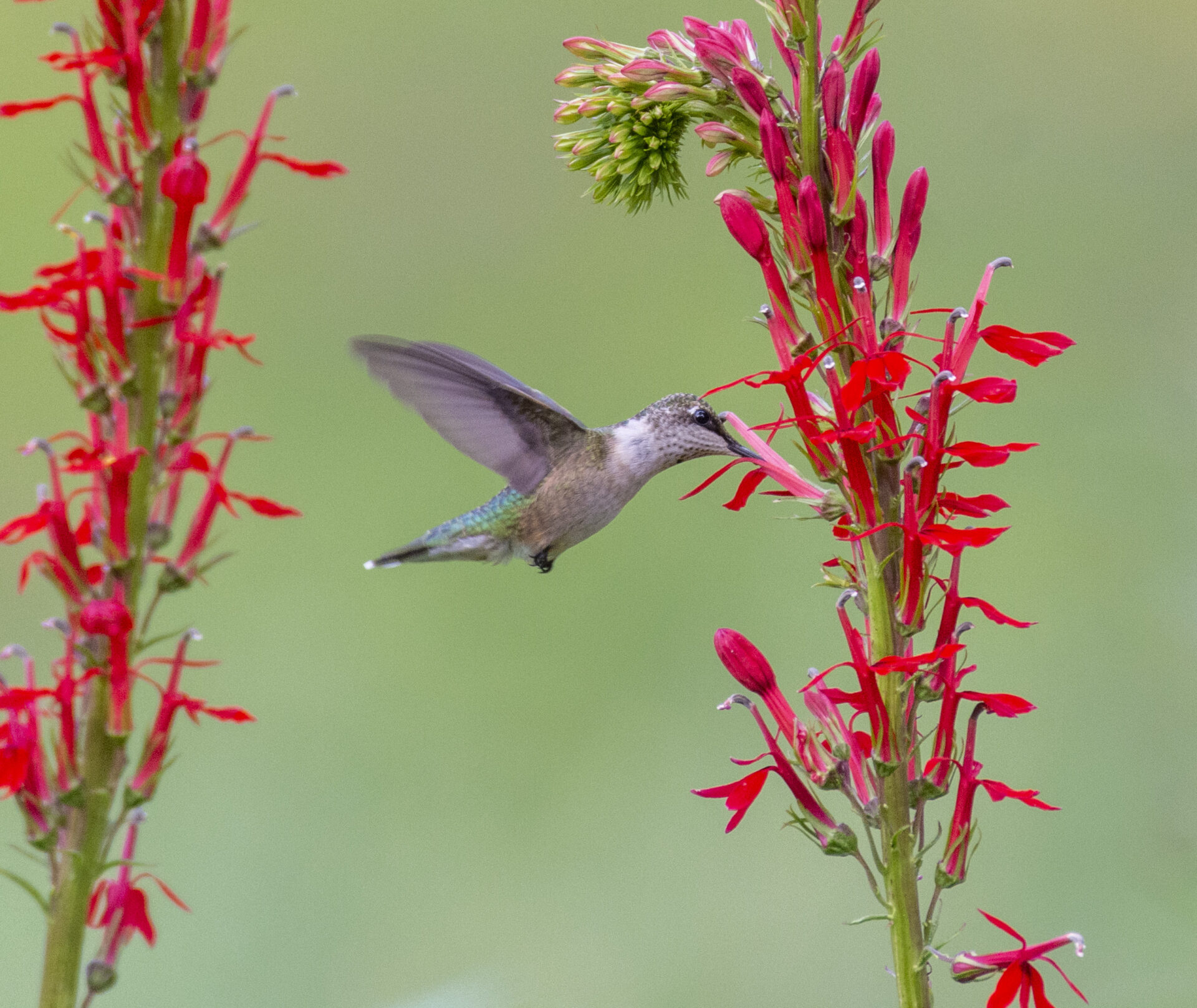

Celebrate Native Plants
At Jenkins, native plants are at the heart of what we do. Our Green Ribbon Native Plant® selection program highlights the beauty and benefits of plants native to eastern North America. These plants are not only adaptable to diverse environmental conditions and visually appealing, but they also play a crucial role in supporting the local ecosystem. You can find these remarkable plants flourishing throughout the gardens at Jenkins, offering a perfect blend of beauty and purpose.
selection criteria:
- Native to the eastern United States
- Adaptable to a wide range of environmental conditions
- Horticulturally appealing in a variety of landscape situations
- High in ecological and environmental value
The Green Ribbon Native Plant® Program features a carefully researched collection of plants with the greatest demonstrated ecological impact. This living list will be updated as new research becomes available.
collection highlightS
Black cherry
(Prunus serotina)
In addition to its fragrant white flowers and red-orange fall color, black cherry supports pollinators with abundant, high-quality nectar rewards. Its lustrous dark leaves are an important food source for 340 species of butterflies and moths, ranking second only to oaks. Its small “cherries” provide yet another important source of high-quality nutrition to the more than 30 songbird species that relish them in summer.
Purpleflowering raspberry
(Rubus odoratus)
The hollow or pithy canes of purpleflowering raspberry are ideal habitat for cane-nesting bees. Its large, showy flowers are high in proteins, sugars, amino acids, and antioxidants that provide bees with significant health benefits, including an increase in lifespan. Birds eat the attractive berries that follow; these contain high levels of antioxidants, particularly anthocyanin, which help reduce oxidative stress during flight.
Zigzag goldenrod
(Solidago flexicaulis)
The tall spikes of zigzag goldenrod provide highly valuable, late-season nectar and pollen. 42 species of pollen specialist bees rely on goldenrod; their larvae would not survive without the species. Goldenrod also support 104 different species of moth and butterfly larvae – the most among all herbaceous plants – as well as beneficial predatory insects. Its seedheads provide songbirds with a winter food source.
Green Ribbon Native Plant® List
Trees
- Red maple (Acer rubrum)
- Sugar maple (Acer saccharum)
- Canadian serviceberry (Amelanchier canadensis)
- Allegheny serviceberry (Amelanchier laevis)
- River birch (Betula nigra)
- Musclewood (Carpinus caroliniana)
- Shagbark hickory (Carya ovata)
- Eastern redbud (Cercis canadensis)
- Alternateleaf dogwood (Cornus alternifolia)
- Flowering dogwood (Cornus florida)
- Cockspur hawthorn (Crataegus crus-galli)
- Green hawthorn (Crataegus viridis)
- American holly (Ilex opaca)
- Eastern redcedar (Juniperus virginiana)
- Sweetgum (Liquidambar styraciflua)
- Tuliptree (Liriodendron tulpifera)
- Southern magnolia (Magnolia grandiflora)
- Sweetbay magnolia (Magnolia virginiana)
- Black gum (Nyssa sylvatica)
- Sourwood (Oxydendrum arboreum)
- Eastern cottonwood (Populus deltoides)
- Black cherry (Prunus serotina)
- Chokecherry (Prunus virginiana)
- White oak (Quercus alba)
- Swamp white oak (Quercus bicolor)
- Chestnut oak (Quercus montana)
- American basswood (Tilia americana)
Shrubs
- Bottlebrush buckeye (Aesculus parviflora)
- Red chokeberry (Aronia arbutifolia)
- Black chokeberry (Aronia melanocarpa)
- False indigo (Baptisia australis)
- Buttonbush (Cephalanthus occidentalis)
- Summersweet (Clethra alnifolia)
- Gray dogwood (Cornus racemosa)
- Redtwig dogwood (Cornus sericea)
- American hazlenut (Corylus americana)
- Northern bush honeysuckle (Diervilla lonicera)
- Smooth hydrangea (Hydrangea arborescens)
- Kalm’s St. John’s wort (Hypericum kalmianum)
- Inkberry (Ilex glabra)
- Winterberry holly (Ilex verticillata)
- Northern bayberry (Morella pensylvanica)
- Common ninebark (Physocarpus opulifolius)
- Winged sumac (Rhus copallinum)
- Purpleflowering raspberry (Rubus odoratus)
- Pussywillow (Salix discolor)
- Elderberry (Sambucus canadensis)
- Meadowsweet (Spiraea alba)
- Coralberry (Symphoricarpos orbiculatus)
- Highbush blueberry (Vaccinium corymbosum)
- Arrowwood viburnum (Viburnum dentatum)
- Possumhaw viburnum (Viburnum nudum)
Perennials
- Eastern bluestar (Amsonia tabernaemontana)
- Swamp milkweed (Asclepias incarnata)
- Butterflyweed (Asclepias tuberosa)
- Threadleaf coreopsis (Coreopsis vertcillata)
- Purple coneflower (Echinacea purpurea)
- Wild strawberry (Fragaria virginiana)
- Spotted geranium (Geranium maculatum)
- Swamp sunflower (Helianthus angustifolius)
- Northern blue flag iris (Iris versicolor)
- Dense blazing star (Liatris spicata)
- Wild lupine (Lupinus perennis)
- Wild bergamot (Monarda fistulosa)
- Hairy beardtongue (Penstemon hirsutus)
- Summer phlox (Phlox paniculata)
- Jacob’s ladder (Polemonium reptans)
- Appalachian mountain mint (Pycnanthemum flexuosum)
- Hoary mountain mint (Pycnanthemum incanum)
- Clustered mountain mint (Pycnanthemum muticum)
- Zigzag goldenrod (Solidago flexicaulis)
- Gray goldenrod (Solidago nemoralis)
- Wrinkleleaf goldenrod (Solidago rugosa)
- Showy goldenrod (Solidago speciosa)
- Autumn goldenrod (Solidago sphacelata)
- Stoke’s aster (Stokesia laevis)
- Smooth aster (Symphyotrichum laeve)
- New England aster (Symphyotrichum novae-angliae)
- Aromatic aster (Symphyotrichum oblongifolium)
- Short’s aster (Symphyotrichum shortii)
- Foamflower (Tiarella cordifolia)
Grasses
- Switch grass (Panicum virgatum)
- Little bluestem (Schizachyrium scoparium)
- Prairie dropseed (Sporobolus heterolepis)
Vines
- Coral honeysuckle (Lonicera sempervirens)
- Virginia creeper (Parthenocissus quinquefolia)
You must be logged in to post a comment.