
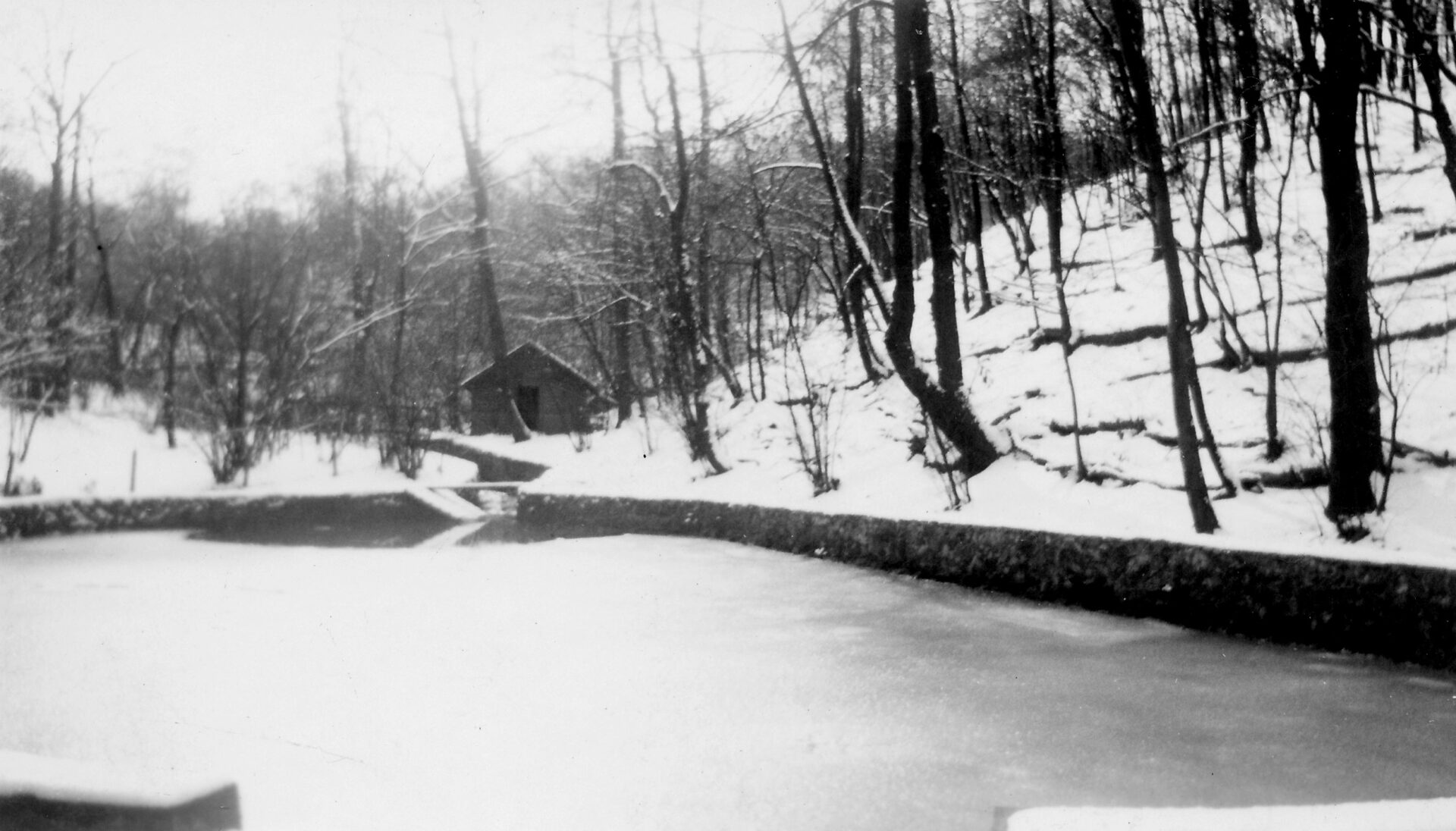
Fifty years ago, a quiet corner of Devon, Pennsylvania began its transformation into one of the region’s most beloved gardens. What started as a bequest from H. Lawrence Jenkins – a man inspired by his late wife’s love for nature and beauty – has flourished into a thriving center where people come together to explore, learn, and find a sense of peace in the natural world.
GROWING JENKINS
A Seed Is Planted
H. Lawrence & Elisabeth Phillippe Jenkins
The home and twenty acres on which Jenkins was first planned were formerly the property of H. Lawrence and Elisabeth Phillippe Jenkins. Elisabeth and Lawrence were neither a wealthy nor a noted couple. They lived within their means and enjoyed the beautiful natural setting of their home. It was at the Jenkins house, situated on a hillside and filled with wonderful woodland trees and shrubs, that Elisabeth cultivated a love of nature.
When Elisabeth died in 1963, Lawrence decided to preserve their 20-acre property as a living memorial to his late wife.
Through his will, he established the Elisabeth Phillippe Jenkins Foundation, stating that the property should be developed into a “…public park, arboretum, and wildlife sanctuary for the use of the public and responsible organizations engaged in the study of arboriculture, horticulture, and wildlife for educational and scientific purposes.” Lawrence died in 1968, and his bequest continues the Jenkins’ legacy, preserving the woodland and gardens Elisabeth so loved.
Louisa P. Browning
Moved by Lawrence’s gesture, neighbor Louisa P. Browning deeded her adjacent 26 acres of woodland to Jenkins in 1971, more than doubling the size of the garden. The Browning property included a Revolutionary era log cabin that R. Brognard Okie, renowned Philadelphia architect and cousin of Louisa’s late husband, Edward Browning, was asked to rework. Today, the Browning cabin and restored cottage provide housing for staff and Apprentices.


A Vision Takes Root
George Erwin Patton, noted Philadelphia landscape architect, was hired to develop a proposal on how best to convert the property into a public garden. Based on slope, soil type, and drainage of the site, he proposed the property be developed to feature native flora as well as plants in the Ericaceae (heath family) such as rhododendrons, azaleas, mountain laurels, and blueberries. He believed that this type of garden would complement the many gardens that had already been established in the Philadelphia area. Decades later, Patton’s plan still guides how we steward our collection.
A Garden Grows
The Sweetman Era: 1974 – 2019
Throughout the 1970s, steps were taken to create a public botanical garden. Trails were created, a pond was installed, a visitor’s center was constructed, and rhododendrons, azaleas, and other ericaceous plants were planted in keeping with George Erwin Patton’s site plan. In 1974, Leonard H. Sweetman was hired as the first Director. It wasn’t until 1976, however, that Mr. Jenkins’ vision was realized when his property officially opened to the public as what is known today as Jenkins.
After 12 years of service, Leonard passed the reins to his son, Harold E. Sweetman, Ph.D. who became Jenkins’ second Director in 1986. Over the next several decades, major changes involved the construction of a greenhouse, construction of the LEED-certified John J. Willaman Education Center, establishment of the Hamilton Educational Fellowship (now the Hamilton Horticulture Apprenticeship), expansion of the botanical collections, and the addition of full-time horticulture staff, seasonal interns, and weekly volunteers.


A New Chapter Begins
After more than 30 years of leadership, Harold Sweetman retired in 2019, and Jenkins welcomed Tom Smarr as its third Executive Director.
With a bold strategic plan, reimagined master plan, refreshed visual identity, and expanded staff, Jenkins continues to advance a mission rooted in education, conservation, and community connection.
You must be logged in to post a comment.